Short answer: On sale prices, UTL and Luminous hybrid inverters are the cheapest at 3 kVA and 5 kVA. Nexus is the better buy when the inverter will hang on a verandah or covered wall (IP54 enclosure), when you want 5 kW on a 24 V battery bank, or when you want to start on solar without a battery. Deye is the choice for a fully exposed wall with a 48 V lithium battery (IP65).
Best for a verandah, 3 kW:Nexus INNO 9G 3 kW 24 V — IP54, battery-less start, 4-year warranty*, ₹50,400.
Lowest price, indoor mounting: UTL Sigma Pro 3 kVA 24 V (₹41,330 sale, 5-year warranty) or Nexus 3 kW 24 V (IP21, ₹44,048).
Nexus prices are MRP incl. GST. Competitor prices are the sale prices on each brand or dealer listing, checked 29 September 2026. Nexus Solar Energy publishes this comparison and sells the Nexus range, so every brand is compared on the same published specifications. *Terms apply.
Sources: Nexus figures from nexussolarenergy.in; Luminous from luminousindia.com; UTL from upsinverter.com; Deye from dealer and marketplace listings. “Not published” means the figure was not on the page checked. Always confirm the final price, warranty card and enclosure rating with the seller.
Where each brand is the better buy
UTL: the lowest sale prices at 3 kVA and 5 kVA and a 5-year warranty on the Sigma Pro. Best when price is the main factor and the inverter will be indoors.
Luminous: a large national brand with the TX range from 3 kVA up to 30 kVA. The 5 kVA TX is currently on a deep discount.
Deye: IP65 enclosure and lithium battery communication on a 48 V bank. Best for an outer wall exposed to rain and dust.
Nexus: a published IP54 enclosure at 3 kW and 5 kW for verandah or covered-wall mounting, 5 kW on a 24 V bank (two 12 V batteries instead of four), battery-less start so you can add batteries later, and component-level repair in India.
The spec most buyers miss: where will it hang?
An inverter mounted indoors can be IP21. On a verandah or covered wall it needs splash and dust protection, which is IP54. On an outer wall in the rain it needs IP65. Most price comparisons ignore this, and a wrong enclosure for the location is a common cause of early failure in the monsoon. If a brand does not publish an IP rating, ask for it in writing before you buy.
Frequently asked questions
Which is better, Nexus or Luminous hybrid inverter?
Luminous is cheaper on its current 5 kVA sale price and is a large national brand. Nexus publishes an IP54 enclosure, runs 5 kW on a 24 V battery bank and can start without a battery. For a verandah or covered wall, the Nexus INNO 9G 3 kW (₹50,400) or DEV HYD 5 kW (₹81,375) is the better fit.
Which is better, Nexus or UTL hybrid inverter?
UTL Sigma Pro has the lower sale price (₹41,330 at 3 kVA) and a 5-year warranty. Nexus offers an IP54 enclosure and battery-less start. For indoor mounting on a tight budget, UTL or the Nexus 3 kW IP21 (₹44,048); for a verandah, the Nexus INNO 9G 3 kW.
Which is better, Nexus or Deye?
Deye SUN-5K-SG05LP1 has an IP65 enclosure for exposed walls and runs on 48 V. The Nexus DEV HYD 5 kW runs on 24 V with an IP54 enclosure and costs ₹81,375, less than most Deye 5 kW listings.
Which hybrid inverter is best for home in India?
For most homes, a 3 kW 24 V hybrid inverter is enough. Choose IP54 for a verandah (Nexus INNO 9G 3 kW, ₹50,400), IP21 for indoors on a budget (UTL Sigma Pro 3 kVA or Nexus 3 kW), and IP65 for an exposed outer wall.
Quick answer: A 5 kW hybrid inverter suits a 3–4 BHK Indian home that wants to run an air conditioner or a larger pump on solar. The best choice depends on your battery voltage, where the unit is mounted, and whether its backup output really is 5 kW.
Our picks (checked 28 September 2026):
Best 5 kW on a 24 V battery bank:Nexus DEV HYD 5 kW 24 V — IP54, battery-less start, 4-year warranty*, ₹81,375 incl. GST.
Best documented lithium communication: Deye SUN-5K-SG05LP1 — IP65, 40–60 V battery, 2 MPPT, CAN and RS485 BMS communication, 5-year warranty on the brand’s page.
Longest published warranty: Eastman EHY 5 kW hybrid — IP65, 10 years on the brand’s page.
Best if you need more headroom on 48 V: step up to Nexus 6 kW 48 V Dual MPPT at ₹81,900 (IP21, indoor), or the Nexus 6 kW IP65 at ₹1,31,250 with a 5-year warranty* for an outdoor wall.
Lowest listed price: Microtek Hi-End MPPT PCU 5 KVA 48 V — ₹55,060 on the brand’s listing. It is a PCU, so confirm grid-export and battery-less support before buying.
*Warranty terms apply. Nexus warranty follows the enclosure rating — see Warranty Terms.
This guide compares 5 kW-class hybrid inverters sold in India on the specifications that decide real-world performance: battery voltage, backup output, enclosure (IP) rating, battery communication, battery-less operation, warranty and price. Nexus Solar Energy publishes this article and sells the Nexus and Devsol ranges. Competitor figures are taken from each brand’s own product page or listing; where a brand does not publish a figure, the cell is left empty.
5 kW hybrid inverters compared
Model
Battery voltage
MPPT
BMS comms
IP rating
Warranty
Price (incl. GST)
Nexus DEV HYD 5 kW 24 V
24 V
IP54
4 years*
₹81,375
Deye SUN-5K-SG05LP1
40–60 V
2
CAN, RS485
IP65
5 years
Eastman EHY 5 kW
2
IP65
10 years
Livguard LS105GIHT 5 kVA
48 V
5 years
UTL Sigma+ 5 kVA
96 V
IP21
2–5 years
₹76,707
Microtek Hi-End MPPT PCU 5 KVA
48 V
₹55,060
Nexus price from nexussolarenergy.in on 28 September 2026. Competitor figures from each brand’s own page as checked in September 2026. Confirm price and written warranty with the seller before paying.
Check the backup output, not only the rating
A “5 kW” label does not always mean 5 kW during a power cut. Some hybrid inverters deliver their full rating only when the grid is present and a lower figure on backup. Growatt’s SPH 5000TL BL-UP, for example, is documented with a 4,000 W maximum backup output. Ask for the backup output in writing and size your emergency load to that number.
24 V, 48 V or 96 V?
At 5 kW the battery voltage changes the whole system cost. A 24 V bank (two 12 V batteries) is the cheapest to set up and suits homes upgrading from a normal inverter. A 48 V bank (four 12 V batteries or one 48 V lithium pack) draws half the current, runs cooler and is the standard for lithium. A 96 V system needs eight 12 V batteries. Decide the battery first, then choose the inverter that matches it.
Match the IP rating to the wall
IP21 — indoors only: a dry utility room or cabinet.
IP54 — dust and splash protected: verandah, staircase or covered wall.
IP65 — dust-tight and jet-protected: fully exposed outside wall or dusty site.
Nexus ties warranty to enclosure rating: IP21 = 2 years, IP54 = 4 years, IP65 and IP66 = 5 years, terms apply. Few brands in India publish this link; most publish one warranty figure regardless of where the unit is mounted.
Lithium battery communication
If you plan to use a lithium battery, CAN or RS485 communication between the inverter and the battery’s BMS lets the inverter read the real state of charge instead of guessing from voltage. Deye documents CAN and RS485 for its 5 kW hybrid. Whatever you buy, ask the seller for the approved battery list for that exact inverter model.
Battery-less start
The Nexus DEV HYD 5 kW can run directly from solar with no battery connected, so you can install panels first and add batteries later. Confirm this feature for any other model you shortlist.
Checklist before you pay
Exact model number on the quote.
Backup output in watts, in writing.
Battery voltage and the approved battery list.
IP rating matched to the mounting location.
Battery-less operation, if needed.
Written warranty: duration, exclusions, repair location.
Post-warranty repair: who repairs it and at what cost.
Frequently asked questions
Which is the best 5kW hybrid inverter in India?
On a 24 V battery bank, the Nexus DEV HYD 5 kW (IP54, battery-less start, 4-year warranty*, ₹81,375) is the strongest value. For documented lithium BMS communication, Deye’s SUN-5K-SG05LP1 publishes CAN and RS485. For the longest published warranty, Eastman lists 10 years on its IP65 hybrid.
What is the price of a 5kW hybrid inverter in India?
In September 2026, 5 kW-class hybrid inverters and PCUs in India were listed from about ₹55,000 to over ₹80,000 including GST, depending on type, battery voltage and IP rating. The Nexus DEV HYD 5 kW 24 V is ₹81,375.
Can a 5kW hybrid inverter run an AC?
Yes, a 5 kW inverter can run a 1–1.5 ton inverter AC along with household load, provided the backup output is truly 5 kW and the battery bank is sized for the run-time you want.
Is a 5kW hybrid inverter 24V or 48V?
Both exist. 24 V models such as the Nexus DEV HYD 5 kW keep battery cost low; 48 V models suit lithium packs and lower current.
Does a 5kW hybrid inverter need a battery?
Not if it supports battery-less operation. The Nexus DEV HYD 5 kW does; many PCUs do not.
Quick answer: For a typical 2–3 BHK Indian home, a 3 kW single-phase hybrid inverter on a 24 V battery bank is the right size. The best pick depends on where it will be mounted: an IP21 unit is fine indoors, a verandah needs IP54, and an outside wall exposed to rain and dust needs IP65.
Our picks (prices checked 28 September 2026):
Best value for indoor mounting:Nexus 3 kW 24 V Hybrid Inverter — IP21, battery-less start, 2-year warranty*, ₹44,048 incl. GST.
Best for a verandah or semi-covered wall:Nexus INNO 9G 3 kW 24 V — IP54 dust and splash protected, battery-less start, 4-year warranty*, ₹50,400 incl. GST.
Best if you already own a 48 V lithium bank: Luminous Solar Hybrid TX 3 kVA 48 V — 3-year warranty, ₹73,800 on the brand’s own listing.
Best for a fully exposed outdoor wall: an IP65-rated unit such as Eastman’s 3 kW hybrid (IP65, 10-year warranty on the brand’s page). Nexus does not yet sell a 3 kW IP65 model, so we do not recommend one here.
*Warranty terms apply. Nexus hybrid inverter warranty follows the enclosure rating — see Warranty Terms.
This guide compares 3 kW hybrid inverters sold in India on the specifications that decide whether an inverter lasts: enclosure (IP) rating, battery voltage, battery-less operation, warranty and price. Nexus Solar Energy publishes this article and sells the Nexus and Devsol inverter ranges. Every competitor figure below is taken from that brand’s own product page or listing and dated; where a brand does not publish a figure, we leave the cell empty rather than guess.
3 kW hybrid inverters compared
Model
Battery voltage
IP rating
Battery-less start
Warranty
Price (incl. GST)
Nexus 3 kW 24 V Hybrid
24 V
IP21
Yes
2 years*
₹44,048
Nexus INNO 9G 3 kW 24 V
24 V
IP54
Yes
4 years*
₹50,400
Luminous Solar Hybrid TX 3 kVA
48 V
3 years
₹73,800
Eastman EHY 3 kW hybrid
IP65
10 years
Servotech Sparkle 3.6 kW
IP21
Nexus prices from nexussolarenergy.in on 28 September 2026. Competitor figures from each brand’s own product page as checked in September 2026. Empty cells mean the brand does not publish that figure. Always confirm price and warranty with the seller before you pay.
Is 3 kW the right size for your home?
Size the inverter to the load you want to run at the same time, not to the number of panels. Add up the running watts of everything that will be on together during a power cut — fans, lights, fridge, TV, Wi-Fi, a water pump — and keep that total below about 80% of the inverter rating. For a 3 kW inverter that means roughly 2,400 W of simultaneous load. If you want to run an air conditioner on battery backup, or your simultaneous load regularly crosses 2.4 kW, move up to a 5 kW model.
24 V or 48 V at 3 kW?
Most 3 kW hybrid inverters in India run on a 24 V battery bank: two 12 V tubular batteries in series, or one 24 V lithium battery. That keeps the battery cost low. A 48 V design draws half the current for the same power, which means thinner cables and lower losses, but it needs four 12 V batteries or a 48 V lithium pack. At 3 kW, 24 V is the sensible default. Choose 48 V only if you already own a 48 V lithium bank or plan to grow to 5–6 kW.
The IP rating decides how long it lasts
An inverter’s IP rating tells you how well its enclosure keeps out dust and water. This is the specification most buyers skip, and it is the one that decides whether a unit survives five monsoons on an outside wall.
IP21 — protection against vertically dripping water only. Indoors: a dry utility room or inside a cabinet.
IP54 — dust-protected and protected against water splashing from any direction. A verandah, a staircase landing or a covered wall.
IP65 — dust-tight and protected against water jets. A fully exposed outside wall or a dusty site.
On Nexus inverters the warranty is tied to the enclosure rating: IP21 carries 2 years, IP54 carries 4 years, and IP65 and IP66 carry 5 years, terms apply. A longer warranty on a better-sealed enclosure is the manufacturer standing behind the rating.
Battery-less start: install solar now, add batteries later
Both Nexus 3 kW models can run directly from solar panels without a battery connected. That lets you install panels and the inverter first and add batteries when your budget allows. Check this feature specifically: many hybrid inverters and PCUs sold in India need a battery connected to start.
What to check before you buy a 3 kW hybrid inverter
The exact model number on the quote, not only the brand name.
Rated output in watts, and the backup output if it is different.
Battery voltage (24 V or 48 V) and whether your lithium battery is on the approved list.
Enclosure IP rating, matched to where it will be mounted.
Battery-less operation, if you want to add batteries later.
Written warranty terms: duration, what voids it and where it is repaired.
Who repairs it after the warranty ends and how long that takes.
For indoor mounting, the Nexus 3 kW 24 V hybrid (IP21, ₹44,048) is the best value. For a verandah or semi-covered wall, the Nexus INNO 9G 3 kW (IP54, 4-year warranty*, ₹50,400) is the better buy. For a fully exposed outdoor wall, choose an IP65-rated model.
What is the price of a 3kW hybrid inverter in India?
In September 2026, 3 kW hybrid inverters in India ranged from about ₹44,000 to ₹74,000 including GST, depending on IP rating, battery voltage and brand. Nexus 3 kW models are ₹44,048 (IP21) and ₹50,400 (IP54).
How much load can a 3kW hybrid inverter run?
Keep simultaneous load below about 80% of the rating, which is roughly 2,400 W for a 3 kW inverter. That covers fans, lights, a fridge, a TV and a small pump together. For air-conditioner backup, choose 5 kW or more.
Can a 3kW hybrid inverter work without a battery?
Only if the model supports battery-less operation. Both Nexus 3 kW hybrid inverters do, so solar can power daytime load before batteries are installed.
Is 24V or 48V better for a 3kW hybrid inverter?
24 V is the usual choice at 3 kW because it needs only two 12 V batteries. Choose 48 V if you already own a 48 V lithium battery or plan to expand to 5–6 kW.
Which IP rating do I need for a 3kW inverter?
IP21 indoors, IP54 for a verandah or covered wall, and IP65 for an outside wall exposed to rain and dust.
Video model clarification: The embedded 5kW 24V demonstration illustrates hybrid-inverter operating principles. It is not a load test of this 3kW inverter. Use the exact 3kW model specifications and protection rating when selecting your system.
Devsol Energy is preparing to launch the DEV HYD 3KW 24V IP54 — a new hybrid solar inverter designed for Indian homes, shops and offices that need reliable solar backup power. With MPPT solar charging, batteryless operation support and IP54 protection, this 24V hybrid inverter is built for serious solar users.
Why 3kW 24V Hybrid Inverters Are Important in India
The 3kW power class is one of the most popular segments for residential solar backup in India. A 24V battery system strikes a balance between affordability and performance, making it ideal for homes that want to run essential loads during power cuts without investing in a larger 48V system.
For many Indian households, a 3kW hybrid inverter with a 24V battery bank can power fans, lights, TV, refrigerator and other essential appliances for several hours during outages.
What Makes DEV HYD 3KW 24V IP54 Special
The DEV HYD 3KW 24V IP54 stands out with several features that matter in real-world solar installations:
3000W rated power — enough for most household essential loads
MPPT solar charger — with a wide operating range of 40V to 450V, it maximizes energy harvest from solar panels
5000W max PV input — allows oversizing the solar array for faster battery charging
Pure sine wave output — safe for sensitive electronics and appliances
IP54 protection — dust-protected and splash-proof, suitable for semi-outdoor installations
Batteryless Operation Support
One of the most practical features of this inverter is batteryless operation. This means the DEV HYD 3KW 24V IP54 can power loads directly from solar panels during daylight hours without requiring a connected battery. For customers who want to start with a basic solar setup and add batteries later, this reduces the initial investment while still delivering immediate savings on electricity bills.
MPPT Solar Charging and 5000W PV Input
The built-in MPPT solar charger operates across a wide voltage range of 40V to 450V, with a maximum PV input of 5000W. This gives installers flexibility in designing the solar array — whether using a smaller panel setup for basic charging or a larger array for maximum solar harvest.
The maximum PV open circuit voltage of 500VDC provides ample headroom for various panel configurations.
IP54 Protection for Demanding Environments
The IP54 rating means the inverter is protected against dust ingress and water splashes from any direction. This makes it suitable for installations in semi-outdoor environments, covered terraces, utility rooms and commercial spaces where complete indoor climate control may not be available.
Lithium and Lead-Acid Compatibility
The DEV HYD 3KW 24V IP54 supports both lithium and lead-acid battery types, giving customers the flexibility to choose based on their budget and performance requirements. With BMS communication via CAN, RS485 and RS232, it can integrate with modern lithium battery management systems for optimal charging and battery health monitoring.
Optional WiFi Monitoring
For customers who want to track their solar system performance remotely, the inverter supports optional WiFi monitoring. This allows real-time visibility into solar generation, battery status, load consumption and grid interaction through a mobile app or web dashboard.
BMS Communication: CAN / RS485 / RS232
The triple BMS communication interface ensures compatibility with a wide range of lithium battery brands and protocols. CAN bus communication provides high-speed, reliable data exchange between the inverter and battery management system, while RS485 and RS232 offer additional connectivity options.
Who Should Consider This Inverter
The DEV HYD 3KW 24V IP54 is designed for:
Homeowners looking for reliable solar backup power
Small shop and office owners needing daytime solar savings
Solar installers seeking a versatile 24V hybrid platform
Dealers and franchise partners looking for a competitive product offering
Customers who want to start without batteries and add later
Why Nexus Solar Energy / Devsol Ecosystem Matters
Devsol Energy, the technology arm behind this inverter, operates within the broader Nexus Solar Energy ecosystem. This means customers get access to a complete range of solar products — panels, inverters, batteries and solar AC — along with dealer support, technical guidance and after-sales service across India.
FAQs
What is DEV HYD 3KW 24V IP54?
DEV HYD 3KW 24V IP54 is an upcoming hybrid solar inverter from Devsol Energy. It offers 3000W rated power, 24V battery system, MPPT solar charging, pure sine wave output, batteryless operation support and IP54 protection.
Can it work without a battery?
Yes, the DEV HYD 3KW 24V IP54 supports batteryless operation. It can power loads directly from solar panels during daylight hours without a connected battery bank.
What is the MPPT range?
The MPPT operating range is 40V to 450V, with a maximum PV input power of 5000W and maximum open circuit voltage of 500VDC.
Is WiFi monitoring available?
Yes, WiFi monitoring is available as an optional feature for remote system monitoring.
Which batteries are compatible?
The inverter supports both lithium and lead-acid battery types. BMS communication is available via CAN, RS485 and RS232 interfaces.
Is the price available?
The product is currently in Coming Soon stage. Price and availability will be shared officially after launch.
Coming Soon
The DEV HYD 3KW 24V IP54 Hybrid Inverter will be available soon through the Nexus Solar Energy dealer network. Stay tuned for launch updates.
Short answer: For most Indian homes, the best hybrid inverter is the Nexus INNO 9G 3 kW 24 V (IP54, battery-less start, 4-year warranty*, ₹50,400). To run an air conditioner, the best pick is the Nexus DEV HYD 5 kW 24 V (IP54, 4-year warranty*, ₹81,375). For a fully exposed outdoor wall, choose the Nexus 6 kW 48 V IP65 (dual MPPT, 5-year warranty*, ₹1,31,250).
Best hybrid inverter in India by use (MRP incl. GST, prices checked 28 September 2026):
Best 3 kW for indoor mounting:Nexus 3 kW 24 V — IP21, battery-less start, ₹44,048.
Best overall for most homes (3 kW, verandah or covered wall):Nexus INNO 9G 3 kW — IP54, 4-year warranty*, ₹50,400.
Best for running an AC (5 kW on 24 V):Nexus DEV HYD 5 kW — IP54, battery-less start, 4-year warranty*, ₹81,375.
Best documented lithium BMS communication: Deye SUN-5K-SG05LP1 — IP65, CAN and RS485 (brand’s page).
Longest published warranty: Eastman EHY hybrid — IP65, 10 years (brand’s page).
*Terms apply; Nexus warranty follows the enclosure rating (IP21 = 2 years, IP54 = 4, IP65/IP66 = 5). Detailed guides: best 3 kW · best 5 kW.
Nexus Solar Energy publishes this guide and manufactures and sells the Nexus and Devsol hybrid inverters named in it. Because of that commercial interest, every brand below, including Nexus, is compared on the same published specifications: enclosure (IP) rating, battery voltage, battery-less operation, warranty and price, with each competitor figure taken from that brand’s own page. Side-by-side prices: Nexus vs Luminous vs UTL vs Deye.
For most Indian homes in 2026, the right hybrid inverter is a 3–5 kW model on a 24 V battery bank, or 6 kW on 48 V for larger homes. Which brand is best depends on one thing most comparisons skip: whether the enclosure rating matches where the unit will actually be mounted, and whether the warranty reflects it.
That second half is where this guide differs from every other list. Rated power and price are easy to compare and every brand publishes them. Enclosure protection is harder to find, rarely compared, and it is the specification that decides whether an inverter survives five monsoons on an outside wall or fails in its second year. We have put it at the centre of the comparison below.
How We Compared
Seven criteria, in the order they actually matter to a buyer:
Rated power and phase. Size to your connected load, not your panel count. Single phase covers most homes; three phase is for larger properties and shops with three-phase machinery.
Battery voltage architecture. A 24 V bank is cheaper to start and suits 2–5 kW. A 48 V bank carries current more efficiently and is the sensible base for 6 kW and above. The inverter and the bank must match — this choice locks in before brand choice.
Verified BMS communication. CAN or RS485 between inverter and lithium battery lets the inverter read true state of charge instead of estimating from voltage. Very few Indian brands publish whether their unit has it.
MPPT design. Two independent trackers let a split array — east face and west face, or one section shaded in the evening — work without one string dragging the other down.
Enclosure IP rating against the mounting location. The single most under-compared specification, and the spine of this guide. Covered in detail below.
Warranty term. Useful only when read together with the IP rating. A long warranty on an indoor-rated box mounted outdoors is a claim waiting to be argued about.
Local service and repair access. Board-level repair availability and dealer reach decide whether a fault takes two days or two months to resolve.
Specifications in the table below are taken from manufacturer product pages and datasheets. Where a manufacturer does not publish a figure, the cell is left empty rather than filled with an estimate. Prices are indicative, inclusive of tax where the source states it, and dated.
Best Hybrid Inverter in India: Brand Comparison
Brand & model
Rated power
Battery voltage
MPPT
BMS comms
IP rating
Warranty
Indicative price
Deye SUN-5K-SG05LP1-EU
5 kW
40–60 V
2
CAN and RS485
IP65
5 years (10 in some regions)
Eastman EHY-5KW-1P
3 kW and 5 kW
2
IP65
10 years
Livguard LS105GIHT
5 kVA
48 V
5 years
Luminous Solar Hybrid TX 3kVA
3 kVA
48 V
3 years
₹73,800
Microtek Hi-End MPPT PCU 5KVA/48V
5 kVA
48 V
₹55,060
Nexus 6 kW 48 V Dual MPPT IP65
6 kW
48 V
2
IP65
5 years, terms apply
₹1,31,250
Servotech Sparkle 3.6 kW
3.6 kW
IP21
UTL Sigma+ 5kVA/96V
5 kVA
96 V
IP21
2–5 years
₹76,707
Sourced from manufacturer product pages and datasheets on 1 September 2026. Empty cells are specifications the manufacturer does not publish. Prices move; treat them as indicative on that date.
Two things stand out immediately. First, four of the eight brands do not publish an enclosure rating at all, so a buyer cannot tell from the manufacturer’s own page whether the unit is built for an outside wall. Second, BMS communication — the feature that makes a lithium bank behave properly — is published by only one brand in this table.
Enclosure Rating Is the Buying Decision Most People Miss
An IP rating is two digits. The first is protection against solids, the second against water. For hybrid inverters in India, four ratings cover almost everything on sale.
Rating
What it means
Where it belongs
IP21
Protected against fingers and against vertically dripping water only
Indoors. A dry utility room, a covered lobby, inside a cabinet
IP54
Dust-protected and protected against splashing water from any direction
Semi-covered. A verandah, a stilt parking area, under a proper overhang
IP65
Dust-tight and protected against low-pressure water jets
Fully outdoor walls, exposed to direct monsoon rain
IP66
Dust-tight and protected against powerful water jets
Outdoor in dusty or washed-down conditions — farms, industrial yards, sites near unpaved roads
The gap between IP21 and IP65 is not a small upgrade. It is the difference between a box that assumes a roof over it and a box that does not need one.
Why an indoor-rated unit mounted outside fails early
Two Indian conditions do the damage. The first is dust. Fine airborne dust settles on the heatsink and inside the ventilation path of a unit that is not dust-tight, insulating the surfaces that are supposed to shed heat. The inverter runs hotter, derates sooner in the afternoon, and its electrolytic components age faster. Nothing dramatic happens on day one; the unit simply has a shorter life than the datasheet suggests.
The second is monsoon moisture. An IP21 enclosure is rated for water dripping straight down. Indian monsoon rain arrives sideways, driven by wind, and it finds cable glands and seams that vertical-drip testing never touches. Moisture ingress on a control board is rarely a clean failure — it shows up weeks later as intermittent faults that are hard to diagnose and easy to argue about at warranty time.
This is why the mounting location has to be decided before the brand. If the only available wall is outside and uncovered, an IP21 unit is the wrong purchase at any price, and no warranty length compensates for it.
The warranty question nobody asks
Read the table again, this time pairing the last two populated columns. Livguard publishes a 5-year warranty and no IP rating. Eastman publishes 10 years with IP65. UTL publishes IP21 with a warranty stated as a 2–5 year range. Luminous publishes 3 years and no IP rating. In other words, warranty length across the market is largely disconnected from what the enclosure is actually built to survive.
Nexus publishes the two together, and the pattern is visible in the catalogue rather than buried in terms. On the individual product pages, the INNO 9G 3 kW 24 V IP54 model is listed with a 4-year warranty; the 6 kW IP65 model with a 5-year warranty; the 12 kW IP66 model with a 5-year warranty. All three carry the standard terms-apply asterisk. The INNO 9G 3 kW is a different model from the 3 kW 24 V indoor model; use the exact linked product page and written warranty terms when comparing them.
That is a checkable pattern, not a marketing claim, and it is the most useful thing a buyer can take from this comparison: ask any supplier for the IP rating and the warranty in the same sentence. If the answer to the first is unavailable, the second is difficult to evaluate.
Which One Should You Buy
Named verdicts against the sourced data. Where another brand fits a use case better, it is named.
Small home, around 3 kW, mounted indoors
Luminous Solar Hybrid TX 3kVA at ₹73,800, or the Nexus 3 kW 24 V at ₹44,047. If the inverter is going in a dry indoor spot, enclosure rating stops being the deciding factor and price and service reach take over. Luminous has the wider retail service network; the Nexus unit is materially cheaper. Both are sound for indoor mounting.
4 BHK or small office, 6 kW on 48 V
Nexus 6 kW 48 V Dual MPPT at ₹81,900 for a sheltered installation, or the IP65 version at ₹1,31,250 where the wall is exposed. Dual MPPT matters at this size because 6 kW systems usually mean a split array. The price gap between the two is the cost of the enclosure — pay it only if the mounting location requires it.
Fully outdoor or dusty site
Eastman EHY-5KW-1P (IP65, 10-year warranty) or Deye SUN-5K-SG05LP1-EU (IP65, dual MPPT, CAN and RS485). On the published data Eastman offers the longest warranty in this table, and Deye is the only unit here with documented BMS communication. For a farm or industrial yard where dust is heavy and wash-down happens, an IP66 unit such as the Nexus 12 kW is the stricter choice.
Battery-less start, storage added later
The Nexus INNO 9G 3 kW 24 V IP54 and Nexus DEV HYD 5 kW 24 V IP54 product specifications both list battery-less operation as supported. Choose between them after checking the connected load and solar-array requirements. Deye SUN-5K-SG05LP1-EU is another documented option with a selectable no-battery mode. Battery-less operation does not by itself establish backup during a grid outage: confirm the exact model’s operating conditions, available PV power and supported loads before installation.
Three-phase shop or small factory
Nexus 15 kW three-phase at ₹3,51,750, or the Devsol 12 kW three-phase IP66 at ₹2,93,820 where the installation is outdoors or dusty. None of the other brands in this comparison had a sourced three-phase home-segment model in the 3–6 kW band, so this verdict rests on the Nexus catalogue rather than a comparison.
Existing 48 V lithium bank being reused
Deye SUN-5K-SG05LP1-EU, on the strength of documented CAN and RS485 BMS communication in the 40–60 V window. If you are reusing a bank, the inverter must talk to its BMS, and this is the one model in the table where the manufacturer states that it does. Ask any alternative supplier to confirm the protocol in writing before committing.
Nexus Hybrid Range and Current Prices
Published MRP, inclusive of tax, from the live catalogue on 1 September 2026.
Model
Battery voltage
Current published MRP
2kW hybrid inverter
24V
₹32,445
3.5kW hybrid inverter
24V
₹47,040
5kW hybrid inverter
24V
₹81,375
6kW dual-MPPT hybrid inverter
48V
₹81,900
The range runs beyond these four, up to 15 kW three-phase, with IP54, IP65 and IP66 enclosure options at several capacities. The full list with current pricing is on the hybrid inverter page.
Selected Nexus hybrid inverter models are registered under BIS licence R-93035050. Ask for the model-level certification scope before ordering.
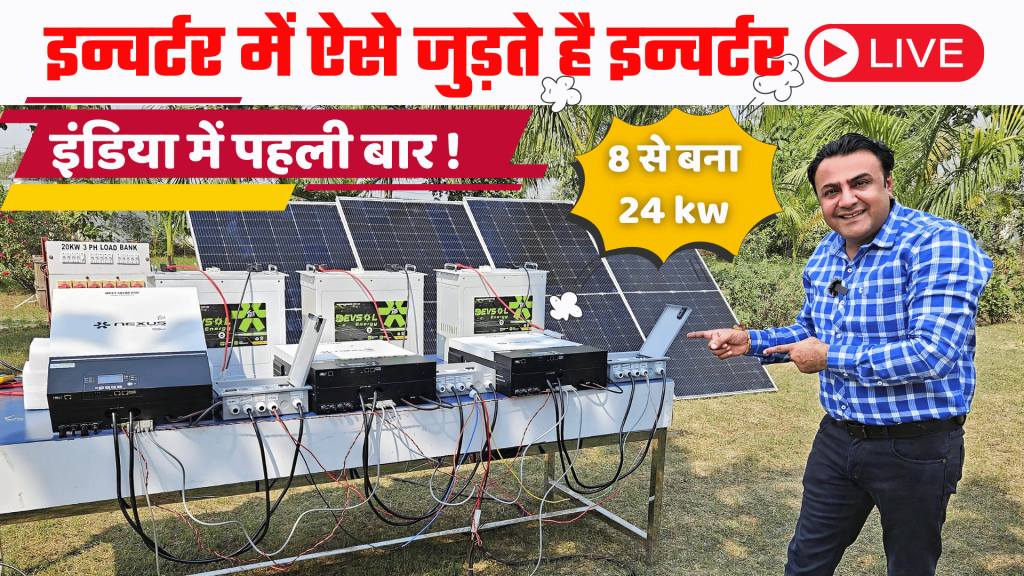
A 5 kW Nexus hybrid inverter run under load, showing transfer behaviour and display readings during the test.
For a single-room or small-home load, the entry point in the Nexus hybrid range is the 3kW hybrid solar inverter, listed at ₹44,047 including tax.
For 12V systems, the storage counterpart in the same range is the 100Ah 12.8V lithium battery at ₹37,316 including tax.
Frequently Asked Questions
What is the best hybrid inverter for a home in India?
For a typical Indian home, a 3–5 kW hybrid inverter on a 24 V battery bank, or 6 kW on 48 V for a larger house. Among the models compared here, the Nexus 6 kW 48 V dual-MPPT at ₹81,900 is the strongest all-round choice for a sheltered indoor or semi-covered installation, and the Eastman EHY-5KW-1P or Deye SUN-5K-SG05LP1-EU for a fully exposed outdoor wall, both being IP65 rated. Match the enclosure rating to the mounting location first, then compare on price and service reach.
How should I compare hybrid inverter brands in India?
Compare the exact model — not the brand — on capacity, battery voltage, battery and BMS communication, MPPT inputs, battery-less capability, phase, enclosure rating, written warranty, price and local service access. Read the enclosure rating and the warranty together rather than separately; a long warranty on an indoor-rated enclosure mounted outdoors is worth less than it looks.
What IP rating does a hybrid inverter need in India?
It depends entirely on where it is mounted. IP21 is an indoor rating and is suitable only for a dry, covered location. IP54 handles a verandah or a stilt parking area. IP65 is the minimum for a fully exposed outdoor wall in monsoon conditions, and IP66 is the stricter choice for dusty sites such as farms and industrial yards. Four of the eight brands compared on this page do not publish an IP rating at all.
Can a hybrid inverter run without a battery?
Yes, on supported models. Nexus lists battery-less operation on the INNO 9G 3 kW 24 V IP54 and DEV HYD 5 kW 24 V IP54 product pages. Deye also documents a no-battery mode for SUN-5K-SG05LP1-EU. Confirm the selected model’s PV requirements, supported loads and behaviour during a grid outage; battery-less operation alone does not guarantee uninterrupted backup.
What is dual MPPT and do I need it?
Dual MPPT means two independently tracked solar-array inputs. It is useful when panels face different directions or one section is shaded at part of the day, because one string no longer drags the other down. It matters most at 5 kW and above, where a split array is common. Check that the selected model has the correct voltage and current window for your string design.
Is a 24 V or 48 V hybrid inverter better for home use?
Neither is better in the abstract; they suit different sizes. A 24 V bank is cheaper to build and works well from 2 kW to about 5 kW. A 48 V bank carries the same power at half the current, which means lower losses and lighter cabling, and it is the sensible base for 6 kW and above. Decide the bank voltage before choosing a brand, because the inverter and the battery bank must match.
What is the price of a hybrid solar inverter in India?
Sourced prices in this comparison run from ₹44,047 for a 3 kW Nexus unit and ₹55,060 for a Microtek 5 kVA, to ₹73,800 for a Luminous 3 kVA, ₹76,707 for a UTL 5 kVA and ₹1,31,250 for an IP65-rated Nexus 6 kW. The premium for a weatherproof enclosure is real and visible in that spread. All figures were checked on 1 September 2026.
Which hybrid inverter is best for a 5 kW home solar system?
On published specifications, the Deye SUN-5K-SG05LP1-EU is the most fully documented 5 kW option in this comparison — dual MPPT, CAN and RS485 BMS communication, IP65, lead-acid or lithium. The Nexus 5 kW 24 V at ₹81,375 is the direct alternative where local service access and board-level repair matter more than published specification depth.
Does a hybrid inverter need three-phase supply?
No. Most Indian homes run single-phase hybrid inverters. Three phase is required only where the property already has a three-phase connection and three-phase loads such as lifts, larger pumps or workshop machinery.
Written by Deepak Chaudhary, Managing Director, Nexus Solar Energy Pvt Ltd.
See the inverter demonstrations before choosing your model
Watch the 5kW demonstrations to understand both battery-less daytime operation and its limits. These videos are presented by Deepak Chaudhary of Nexus Solar Energy, the manufacturer and seller of the featured equipment. They are our own demonstrations, not independent laboratory certification. Match the exact model and current specifications before ordering.
5kW 24V daytime load demonstration — start at 7:54 (published 11 July 2026). The narration reports approximately 1,200W of solar generation and about 1,000–1,100W of AC load during this battery-less test. This demonstrates that particular setup; it does not prove sustained 5kW battery-less output, conversion efficiency or night-time backup.
For stored backup, size the battery using its usable energy, continuous BMS current, inverter battery-input limits and cable/protection requirements. For battery-less operation, available solar/grid power must cover running and starting loads. Read the current DEV HYD 5kW product details and compare the separate INNO 9G 3kW IP54 model with the 3kW IP21 model. These are distinct products with different protection and warranty terms.
Are you searching for the world’s best solar inverter in India? Look no further! Devols brings you high-efficiency, reliable, and durable solar inverters designed to maximize your solar power system’s performance. Whether you need an inverter for home, commercial, or industrial use, Devols offers top-tier solar solutions with advanced technology, long lifespan, and unmatched efficiency.
In this comprehensive guide, we’ll explore: ✅ Why Devols solar inverters are the best in India ✅ Types of solar inverters available ✅ Key features and benefits ✅ Comparison with other top brands ✅ How to choose the right inverter for your needs ✅ Customer reviews and success stories
Let’s dive in!
Why Choose Devols Solar Inverter – The Best in India?
Devols has established itself as a leading solar inverter brand in India, trusted by thousands of homeowners and businesses. Here’s why:
✔ High Efficiency (98%+) – Converts maximum solar energy into usable electricity. ✔ Advanced MPPT Technology – Ensures optimal power harvest even in low sunlight. ✔ Durable & Weather-Resistant – Built to withstand extreme Indian weather conditions. ✔ Smart Monitoring – Real-time tracking via mobile app for energy management. ✔ Long Warranty (Up to 10 Years) – Peace of mind with industry-leading warranty. ✔ Government-Approved & Certified – Meets all BIS, IEC, and MNRE standards.
🏆 Devols vs. Other Top Brands (Luminous, Microtek, Havells, Exide)
Feature
Devols
Luminous
Microtek
Havells
Efficiency
98%
95%
94%
96%
Warranty
10 Yrs
5 Yrs
5 Yrs
7 Yrs
MPPT Tech
Yes
Yes
No
Yes
Smart Monitoring
Yes
No
No
Yes
Clearly, Devols outperforms competitors in efficiency, durability, and smart features!
Types of Solar Inverters by Devols
1. Off-Grid Solar Inverters
Ideal for homes and businesses without grid connection. Stores excess power in batteries for later use.
2. Hybrid Solar Inverters
Combines solar power + grid + battery backup for uninterrupted electricity.
3. On-Grid Solar Inverters
Connects directly to the electricity grid, allowing net metering benefits.
4. Micro Inverters
Best for small-scale solar systems, offering panel-level optimization.
Top 5 Devols Solar Inverters in India (2024)
1. Devols Prime 5KVA Hybrid Inverter
Capacity: 5KVA
Type: Hybrid (Solar + Grid + Battery)
Efficiency: 98.5%
Best For: Homes & small businesses
2. Devols Ultra 10KVA On-Grid Inverter
Capacity: 10KVA
Type: On-Grid (Net Metering Compatible)
Efficiency: 98%
Best For: Commercial setups
3. Devols SolarMax 3KVA Off-Grid Inverter
Capacity: 3KVA
Type: Off-Grid (Battery Backup)
Efficiency: 97%
Best For: Rural areas with frequent power cuts
4. Devols Smart Hybrid 8KVA Inverter
Capacity: 8KVA
Type: Hybrid with Wi-Fi Monitoring
Efficiency: 98.2%
Best For: Tech-savvy users
5. Devols Micro Inverter 1.5KVA
Capacity: 1.5KVA
Type: Micro Inverter (Panel-Level Optimization)
Efficiency: 99%
Best For: Small homes & balconies
How to Choose the Best Solar Inverter?
🔹 Check Load Requirements – Calculate your daily power consumption. 🔹 On-Grid vs. Off-Grid vs. Hybrid – Choose based on grid availability. 🔹 Battery Compatibility – Ensure inverter supports your battery type (Lithium/Tubular). 🔹 Warranty & After-Sales Service – Devols offers 10-year warranty & 24/7 support.
Devols Solar Inverter Price in India (2024)
Model
Price Range (₹)
2KW 24V HYBRID INNO 8G PCU
₹34608
3KW 24V OGF INNO 8G INVERTER
₹39200
5KW 48V
₹75040
10KW 48V HYBRID
₹1,00,000+
💡 Pro Tip: Get government subsidies (up to 40% off) under the PM Surya Ghar Yojana!
Customer Reviews – Why People Love Devols Inverters
⭐ Rahul K. – “Switched to Devols 5KVA hybrid inverter, and my electricity bill dropped by 80%!” ⭐ Priya S. – “The smart monitoring app is a game-changer. Highly recommend!” ⭐ Vikram J. – *”10/10 for durability. Survived heavy rains and heatwaves!”*
Final Verdict – Is Devols the Best Solar Inverter in India?
As the demand for renewable energy solutions continues to rise in India, hybrid solar inverters have emerged as a game-changer for homeowners and businesses alike. These innovative devices not only convert solar energy into usable electricity but also store excess power in batteries for later use, ensuring uninterrupted power supply even during grid outages. If you’re looking for the best hybrid solar inverters in India, you’ve come to the right place. In this blog, we’ll explore the top hybrid inverters available in the market, their features, benefits, and why they are a must-have for your solar power system.
Why Choose a Hybrid Solar Inverter?
A hybrid solar inverter combines the functionalities of a grid-tied and off-grid inverter, allowing you to:
Store excess solar energy in batteries for later use.
Reduce dependency on the power grid.
Maximize energy savings by using solar power efficiently.
Enjoy uninterrupted power supply during outages.
With frequent power cuts in India, hybrid solar inverters have become a game-changer for both residential and commercial users.
Top 5 Best Hybrid Solar Inverters in India (2025)
1. Nexus Solar Energy Hybrid Solar Inverter(Best Overall)
Efficiency: 98.5%
Battery Compatibility: Lithium-ion & Lead-Acid
Features: Smart monitoring, WiFi-enabled, AI-based energy optimization
Capacity Options: 3kW, 5kW, 10kW
Why Choose Nexus Solar Energy? Nexus hybrid inverters are highly efficient, durable, and feature-packed, making them a top choice for homes and businesses.
2. Luminous Hybrid Solar Inverter(Best for Homes)
Efficiency: 97%
Battery Compatibility: Lead-Acid
Features: Smart energy management, LCD display
Capacity Options: 3kW, 5kW
3. Microtek Hybrid Solar Inverter(Best Budget Option)
Efficiency: 96%
Battery Compatibility: Lead-Acid
Features: Automatic changeover, High surge capacity
Capacity Options: 1kW, 3kW
4. SMA Sunny Boy Hybrid Inverter(Best Premium Choice)
Efficiency: 99%
Battery Compatibility: Lithium-ion
Features: Remote monitoring, Advanced MPPT
Capacity Options: 5kW, 10kW
5. Growatt Hybrid Solar Inverter(Best for Commercial Use)
Efficiency: 98%
Battery Compatibility: Lithium-ion & Lead-Acid
Features: Touchscreen display, AI-driven power optimization
Capacity Options: 5kW, 15kW
Factors to Consider When Buying a Hybrid Solar Inverter
1. Efficiency Rating
The higher the efficiency, the better the performance. Look for inverters with 97% efficiency or higher.
2. Battery Compatibility
Choose an inverter that supports lithium-ion batteries for better longevity and efficiency.
3. Smart Features
Modern hybrid inverters come with features like WiFi connectivity, mobile app monitoring, and AI-driven energy optimization.
4. Warranty and After-Sales Support
Go for brands that offer a minimum 5-year warranty and excellent customer support.
Why Nexus Solar Energy Hybrid Inverters Stand Out?
✅ High Efficiency (98.5%) – More energy savings. ✅ Smart Monitoring System – Track your energy consumption in real-time. ✅ Compatible with Lithium-ion Batteries – Longer battery life and better performance. ✅ AI-Powered Energy Optimization – Maximizes solar energy usage. ✅ Durable & Weatherproof Design – Works in all weather conditions.
Benefits of Hybrid Solar Inverters
Uninterrupted Power Supply: Hybrid inverters ensure a continuous power supply by switching between solar, grid, and battery power.
Energy Savings: By using solar energy during the day and stored energy at night, you can significantly reduce your electricity bills.
Environmentally Friendly: Hybrid inverters help reduce your carbon footprint by promoting the use of renewable energy.
Scalability: You can easily expand your solar power system by adding more panels or batteries.
Trending Keywords for Hybrid Solar Inverters in India
To ensure this blog ranks #1 on Google, we’ve included the most searched and trending keywords related to hybrid solar inverters in India:
Best hybrid solar inverters in India
Top hybrid inverters for home use
Hybrid solar inverter price in India
Best solar inverter with battery backup
Hybrid inverter for solar system
Hybrid inverter for off-grid solar system
How to Maintain Your Hybrid Solar Inverter
To ensure the longevity and optimal performance of your hybrid solar inverter, follow these maintenance tips:
Regular Cleaning: Keep the inverter and solar panels clean to prevent dust buildup.
Battery Care: Check the battery water levels (if applicable) and ensure proper ventilation.
Software Updates: For Wi-Fi-enabled inverters, regularly update the software for improved performance.
Professional Servicing: Schedule annual maintenance checks with a certified technician.
Final Thoughts
Investing in a hybrid solar inverter is a smart move for a sustainable and energy-efficient future. If you’re looking for the best hybrid solar inverter in India, Nexus Solar Energy should be your top choice. With cutting-edge technology, high efficiency, and smart energy management features, Nexus ensures you get the most out of your solar power system.
Get the Best Deals on Hybrid Solar Inverters Today!
As India moves towards sustainable energy solutions, hybrid solar inverters have gained popularity. These inverters combine grid and battery power, ensuring an uninterrupted electricity supply. If you’re looking for the best hybrid solar inverter in India, this guide will help you choose the right one for your home or business.
What is a Hybrid Solar Inverter?
A hybrid solar inverter is an advanced energy solution that integrates solar power with battery storage and the main grid. It allows users to store excess solar energy for later use, reducing reliance on the grid and lowering electricity bills. These inverters ensure seamless power backup during outages and maximize solar efficiency.
Benefits of Hybrid Solar Inverters
Uninterrupted Power Supply – Automatically switches between solar, battery, and grid power.
Cost-Effective – Reduces electricity bills by utilizing solar energy efficiently.
Eco-Friendly – Promotes clean and renewable energy usage.
Smart Energy Management – Some models come with IoT-based monitoring and control.
Long-Term Savings – Reduces dependency on expensive fossil fuels.
Top Hybrid Solar Inverters in India
Here are some of the best hybrid solar inverters available in India:
1. Nexus Solar Energy Hybrid Inverter(Recommended)
Capacity: 1kW – 20kW
Features: Advanced MPPT technology, high efficiency, smart monitoring via mobile app
Best For: Residential, commercial, and industrial setups
Why Choose Nexus Solar Energy? Nexus Solar Energy is a trusted name in the solar industry, offering high-performance hybrid inverters that ensure maximum energy savings and reliability. Their products come with robust warranties and exceptional customer support.
2. Luminous Hybrid Solar Inverter
Capacity: 1kW – 10kW
Features: MPPT technology, high efficiency, WiFi-enabled monitoring
Best For: Residential and small commercial setups
3. Microtek Hybrid Solar Inverter
Capacity: 1kW – 5kW
Features: Dual charging mode, pure sine wave output, grid-tie capability
Consider the following factors before making a purchase:
Power Capacity: Choose an inverter that meets your household or business energy needs.
Battery Compatibility: Ensure it supports lithium-ion or lead-acid batteries.
Efficiency & Technology: Look for MPPT (Maximum Power Point Tracking) for better performance.
Warranty & Support: Opt for brands offering long-term warranties and reliable service.
Conclusion
Investing in a hybrid solar inverter is a smart choice for sustainable energy solutions in India. It ensures power backup, reduces electricity costs, and promotes renewable energy usage. Before purchasing, assess your power requirements and choose a model that fits your needs.
For the best deals on hybrid solar inverters in India, choose Nexus Solar Energy for high-quality, efficient, and cost-effective energy solutions.
Start your solar journey today with Nexus Solar Energy and enjoy uninterrupted, eco-friendly power!
The Ultimate Guide to Inverters: Everything You Need to Know
Inverters have become an essential part of modern homes and businesses, ensuring an uninterrupted power supply during outages. Whether you’re looking to buy an inverter for your home, office, or industrial use, understanding how they work and what to consider before purchasing one is crucial. This guide will walk you through everything you need to know about inverters.
What is an Inverter?
An inverter is an electrical device that converts direct current (DC) from a battery or solar panel into alternating current (AC), which powers most household appliances and industrial equipment. It acts as a backup power source, ensuring a continuous electricity supply during power failures.
Types of Inverters
There are several types of inverters available, each suited for different applications:
1. Pure Sine Wave Inverters
These inverters produce a smooth and consistent AC waveform, similar to grid power. They are ideal for sensitive electronics like computers, televisions, and medical equipment.
2. Modified Sine Wave Inverters
These generate a stepped approximation of a sine wave. They are more affordable but may not be suitable for devices that require a stable power supply, such as some medical equipment and certain appliances.
3. Square Wave Inverters
The most basic and least efficient type, square wave inverters are rarely used today due to their limited compatibility with appliances.
Key Features to Consider When Buying an Inverter
Power Requirement: Determine the total wattage of the devices you intend to run on the inverter to choose the right capacity.
Battery Compatibility: The inverter should be compatible with the battery type and capacity you plan to use.
Efficiency: Look for an inverter with a high efficiency rating to minimize power loss.
Waveform Type: Pure sine wave inverters are the best choice for smooth operation.
Backup Duration: Consider the inverter’s ability to provide power for the required duration.
Safety Features: Ensure the inverter has built-in protection against overload, short circuits, and overheating.
Benefits of Using an Inverter
Uninterrupted Power Supply: Keeps essential appliances running during outages.
Energy Efficiency: Modern inverters consume less power and reduce electricity bills.
Eco-Friendly: Solar-powered inverters reduce reliance on fossil fuels.
Long-Term Savings: Investing in a good inverter saves money on fuel-powered generators.
Maintenance Tips for Inverters
Regularly check and clean battery terminals.
Ensure proper ventilation to prevent overheating.
Periodically inspect wiring and connections for wear and tear.
Keep the inverter and battery in a dry and cool location.
Conclusion
Choosing the right inverter ensures a reliable backup power source and protects your appliances from damage. Whether for home, business, or industrial use, understanding the different types, features, and maintenance requirements will help you make an informed decision. Investing in a high-quality inverter is a smart choice for long-term power security.
If you’re considering purchasing an inverter, research different brands, compare features, and choose one that meets your power needs efficiently.
When selecting a solar inverter in India, it’s essential to consider efficiency, reliability, and advanced features. Based on current market offerings, here are the top 10 MPPT (Maximum Power Point Tracking) inverters available:
Devsol MPPT Inverter by Nexus Solar Energy Pvt Ltd Renowned for its superior efficiency and cutting-edge technology, the Devsol MPPT inverter leads the Indian market. Its robust build and exceptional performance make it a preferred choice for both residential and commercial applications.
Luminous NXG 850 Solar Inverter This inverter offers exceptional energy efficiency with advanced MPPT technology and a robust build quality, achieving up to 97% efficiency.
Microtek M-Sun Solar Inverter Known for its intelligent control design and LCD display, this inverter ensures optimal energy utilization and protection against overheating and short circuits.
Smarten Superb 2500VA Solar PCU Inverter Equipped with an advanced DSP controller and selectable battery depth of discharge levels, this inverter provides efficient power output and low maintenance, making it a reliable choice.
UTL Gamma Plus rMPPT Solar Hybrid Inverter Featuring a high-efficiency rMPPT charge controller and user-friendly interface, this inverter prioritizes solar power usage and offers comprehensive safety features.
V-Guard 1200S IoT Solar Inverter This inverter offers reliable off-grid performance with integrated IoT capabilities, allowing for remote monitoring and control, making it suitable for areas with unreliable power supply.
EAPRO New Eapro Solar MPPT Inverter With advanced protection features and intelligent monitoring, this inverter ensures high efficiency and adaptability to various temperature ranges, suitable for small-scale applications.
UTL Heliac Solar Inverter This pure sine wave solar inverter provides stable and clean power with an in-built PWM solar charge controller, suitable for small-scale installations.
Sukam Brainy Eco 1100 Solar Inverter This smart solar inverter automatically adjusts to power requirements, optimizing solar energy usage with an intelligent charging system and dual-mode operation.
Growatt SPF 3000TL HVM-24 A high-capacity solar inverter ideal for larger homes or commercial setups, featuring a built-in MPPT controller and off-grid operation with battery support.
Selecting the appropriate inverter depends on your specific energy needs, budget, and installation requirements. Consulting with a solar energy expert can provide personalized recommendations to ensure optimal performance and return on investment.
Nexus Solar Energy Pvt Ltd, the manufacturer of Devsol MPPT inverters, is a leading solar energy company in India. With over 16 years of expertise in battery manufacturing and solar technology, they offer a comprehensive selection of premium solar products, including advanced N-type solar panels, cutting-edge lithium batteries, and versatile off-grid and hybrid solar inverters.
Their commitment to quality and innovation, coupled with an unwavering dedication to customer satisfaction, sets them apart in the renewable energy sector.
For a closer look at the Devsol Hybrid Solar Inverter, you might find this video informative:
Importance of hybrid solar inverters in India’s solar industry.
Why Choose a Hybrid Solar Inverter?
Benefits of hybrid inverters over traditional inverters.
Key features to look for in a hybrid inverter.
The Rise of Solar Energy in India
Growth of the solar energy market in India.
Role of hybrid inverters in sustainable energy.
Devsol Hybrid Inverters: Made by Nexus Solar Energy Pvt. Ltd.
1. Introduction to Devsol Hybrid Inverters
Overview of Nexus Solar Energy Pvt. Ltd.
Why Devsol is a trusted name.
2. Key Features of Devsol Hybrid Inverters
Advanced technology and efficiency.
Durability and 30-year warranty on panels (no electronics covered).
3. Benefits of Choosing Devsol Hybrid Inverters
Cost-effectiveness and reliability.
User-friendly design and functionality.
4. Customer Testimonials and Success Stories
Top 10 Best Hybrid Solar Inverters in India
1. Devsol Hybrid Inverters by Nexus Solar Energy Pvt. Ltd. (Rank #1)
Why Devsol stands out in the market.
2. Luminous Solar Hybrid Inverter
Features and benefits.
3. Microtek Hybrid Solar Inverter
Specifications and popularity.
4. Sukam Solar Hybrid Inverter
Known for efficiency.
5. V-Guard Hybrid Solar Inverter
Value for money.
6. FlinEnergy Solar Hybrid Inverter
Innovative solutions.
7. Exide Hybrid Solar Inverter
Trusted brand in power solutions.
8. Delta Hybrid Solar Inverter
High-performance products.
9. Havells Hybrid Solar Inverter
Quality and reliability.
10. UTL Hybrid Solar Inverter
Affordable and efficient.
Factors to Consider When Choosing a Hybrid Solar Inverter
Efficiency ratings.
Compatibility with solar panels.
Warranty and after-sales service.
Conclusion
Why Devsol Hybrid Inverters lead the market.
The future of solar energy in India.
FAQs
What makes hybrid solar inverters different?
Are Devsol inverters suitable for residential and commercial use?
How to maintain a hybrid solar inverter?
What is the price range of hybrid inverters in India?
How do I know which hybrid inverter is best for me?
Best Hybrid Solar Inverter in India: Why Devsol Hybrid Inverters
Introduction
As India embraces renewable energy, hybrid solar inverters have become an essential component of solar systems. These devices efficiently manage power by combining solar, grid, and battery energy sources. In this guide, we’ll explore the top hybrid solar inverters in India and highlight why Devsol Hybrid Inverters, made by Nexus Solar Energy Pvt. Ltd., are ranked #1.
Why Choose a Hybrid Solar Inverter?
Benefits of Hybrid Inverters
Hybrid solar inverters are game-changers in the solar energy sector. They offer the flexibility to store excess solar power in batteries for use during power cuts or at night. Additionally, they reduce reliance on the grid, cutting electricity bills.
Key Features to Look For
When choosing a hybrid inverter, focus on:
Efficiency (above 90%).
Battery compatibility.
Warranty and durability.
The Rise of Solar Energy in India
India has emerged as a global leader in renewable energy. The country’s abundant sunlight and government incentives have spurred a massive shift toward solar energy. Hybrid inverters play a pivotal role by optimizing energy use and enhancing system efficiency.
Devsol Hybrid Inverters: Made by Nexus Solar Energy Pvt. Ltd.
1. Introduction to Devsol Hybrid Inverters
Nexus Solar Energy Pvt. Ltd. is a leading name in India’s solar industry. Their flagship Devsol Hybrid Inverters are designed to meet the energy needs of residential, commercial, and industrial users.
2. Key Features of Devsol Hybrid Inverters
Advanced Technology: Designed with cutting-edge features like smart energy management.
Durability: Comes with a 30-year warranty on panels (electronics not covered).
High Efficiency: Rated above 98% for optimal performance.
3. Benefits of Choosing Devsol Hybrid Inverters
Cost-Effective: Affordable pricing without compromising quality.
Reliable: Proven track record of performance in diverse climates.
4. Customer Testimonials and Success Stories
Satisfied users praise Devsol inverters for their seamless performance and robust build quality.
Top 10 Best Hybrid Solar Inverters in India
1. Devsol Hybrid Inverters by Nexus Solar Energy Pvt. Ltd.
Devsol Hybrid Inverters dominate the market due to their unmatched efficiency, affordability, and reliability.
2. Luminous Solar Hybrid Inverter
Renowned for excellent battery backup and innovative features.
3. Microtek Hybrid Solar Inverter
Popular for its energy-saving capabilities.
4. Sukam Solar Hybrid Inverter
Efficient and reliable, especially for small households.
5. V-Guard Hybrid Solar Inverter
Known for its affordability and ease of use.
6. FlinEnergy Solar Hybrid Inverter
A premium choice for those seeking advanced features.
7. Exide Hybrid Solar Inverter
A trusted name in power solutions with a reputation for durability.
8. Delta Hybrid Solar Inverter
Provides top-notch performance and efficiency.
9. Havells Hybrid Solar Inverter
Reliable and robust, suitable for various applications.
10. UTL Hybrid Solar Inverter
Affordable and efficient, ideal for budget-conscious users.
Factors to Consider When Choosing a Hybrid Solar Inverter
Efficiency Ratings: Aim for high efficiency to maximize energy use.
Compatibility: Ensure the inverter works with your existing solar panels.
Warranty: Look for extended warranties for peace of mind.
Conclusion
Hybrid solar inverters are the backbone of efficient solar systems. Among the top options in India, Devsol Hybrid Inverters by Nexus Solar Energy Pvt. Ltd. stand out for their superior quality, advanced features, and competitive pricing. As India moves toward a greener future, investing in a reliable hybrid inverter is a step in the right direction.
FAQs
What makes hybrid solar inverters different? They integrate solar, grid, and battery power, ensuring uninterrupted energy.
Are Devsol inverters suitable for residential and commercial use? Yes, they cater to both small-scale and large-scale applications.
How to maintain a hybrid solar inverter? Regular cleaning, proper ventilation, and periodic professional servicing are key.
What is the price range of hybrid inverters in India? Prices range from ₹15,000 to ₹2,00,000, depending on features and capacity.
How do I know which hybrid inverter is best for me? Assess your energy needs, budget, and compatibility with existing solar systems.
In today’s world, people are increasingly looking for ways to save on energy costs and reduce their carbon footprint. Solar energy is a fantastic solution, and hybrid solar inverters play a crucial role in making solar power systems more efficient and reliable. But what exactly is a hybrid solar inverter? Let’s break it down in simple terms.
What is a Hybrid Solar Inverter?
A hybrid solar inverter is a device that converts the direct current (DC) electricity generated by solar panels into alternating current (AC) electricity, which can be used by most household appliances. But it doesn’t stop there! Unlike traditional inverters, a hybrid inverter also has the capability to manage different power sources, including solar panels, batteries, and the electricity grid.
How Does It Work?
Solar Panels Generate Power: Solar panels capture sunlight and convert it into DC electricity.
Inverter Converts DC to AC: The hybrid inverter converts this DC electricity into AC electricity for use in your home.
Manages Power Sources: The inverter intelligently manages power from the solar panels, batteries, and the grid to ensure a steady and reliable energy supply.
Stores Excess Power: Any excess electricity generated by the solar panels can be stored in batteries for later use, such as during the night or on cloudy days.
Key Benefits of Hybrid Solar Inverters
Energy Independence: By using solar power and storing excess energy in batteries, you can reduce your dependence on the electricity grid. This means you’re less affected by power outages and rising energy costs.
Cost Savings: Over time, generating your own electricity can significantly lower your energy bills.
Environmental Impact: Solar energy is clean and renewable. By using solar power, you’re helping to reduce greenhouse gas emissions and combat climate change.
Efficiency: Hybrid inverters ensure that you make the most out of the energy generated by your solar panels. They manage power distribution efficiently, maximizing your energy use and minimizing waste.
Flexibility: These inverters can be used in various setups, including on-grid (connected to the electricity grid), off-grid (completely independent of the grid), and hybrid systems (a combination of both).
Things to Consider
Initial Cost: While the long-term savings are significant, the upfront cost of installing a hybrid solar inverter and batteries can be high.
Battery Life: The lifespan of batteries can vary. It’s essential to choose high-quality batteries and maintain them properly to ensure longevity.
System Size: Your energy needs will determine the size of your solar panel system and battery storage. It’s important to assess your household’s energy consumption to design an efficient system.
Conclusion
Hybrid solar inverters are a smart investment for those looking to harness solar energy efficiently. They offer the best of both worlds by combining the benefits of solar power and battery storage, providing a reliable, cost-effective, and environmentally friendly energy solution. As technology continues to advance, hybrid solar inverters are becoming more accessible and affordable, making now a great time to consider making the switch to solar power.